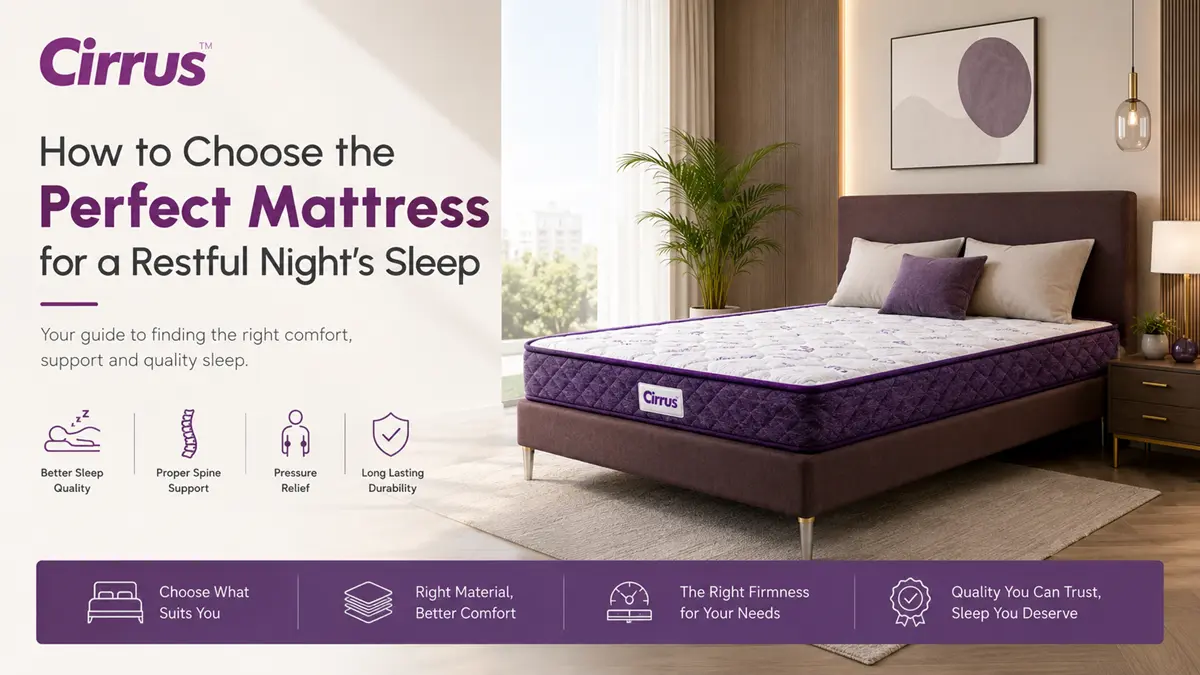
How to Choose the Perfect Mattress for a Restful Night’s Sleep
When it comes to getting a good night’s sleep, the mattress you sleep on plays a crucial role. The right mattress can improve your sleep quality, alleviate aches and pains, and ensure you wake up feeling refreshed and energized. However, with so many options on the market, selecting the best mattress for your needs can feel overwhelming. In this guide, we’ll walk you through the key factors to consider when choosing a mattress that suits your sleep preferences.
1. Understand Your Sleep Position
Your preferred sleep position significantly impacts the type of mattress you should choose.
Back sleepers: A medium-firm mattress is generally ideal for back sleepers. It provides the right balance of support for your spine while offering enough cushioning to relieve pressure from the lower back.
Side sleepers: If you sleep on your side, a softer mattress that can contour to your body will help relieve pressure on your hips and shoulders. Memory foam or hybrid mattresses are popular choices.
Stomach sleepers: A firmer mattress can prevent your spine from sinking too deeply, helping to maintain proper alignment.
2. Consider Your Body Type
Your weight and body type will also influence your mattress choice. Heavier individuals may need a firmer mattress for added support, while lighter individuals may prefer a softer surface to prevent bottoming out. If you’re unsure, medium-firm mattresses tend to be the most versatile, offering enough support for different body types.
3. Choose the Right Mattress Material
There are several types of mattress materials, each offering unique benefits. Here’s a breakdown of the most popular options:
Memory Foam: Memory foam mattresses contour to the body, providing excellent pressure relief and support. They’re especially good for individuals with joint pain or those who tend to toss and turn at night.
Innerspring: Innerspring mattresses feature coils that provide support and durability. They tend to offer a bouncier feel and better airflow compared to memory foam, making them a good option for hot sleepers.
Hybrid: Hybrid mattresses combine the best of both memory foam and innerspring mattresses. They offer the comfort and pressure relief of foam with the support and breathability of coils.
Latex: Latex mattresses are made from natural or synthetic latex, providing a resilient, bouncy feel. They tend to be cooler than memory foam and are known for their durability and eco-friendly properties.
4. Consider the Firmness Level
Firmness refers to how soft or hard the mattress feels. Mattresses are typically rated on a scale from 1 (softest) to 10 (firmest). The ideal firmness level depends on personal preference, body type, and sleep position.
Soft mattresses (3-4 on the scale): Best for side sleepers and those who like a plush feel.
Medium mattresses (5-6 on the scale): Ideal for combination sleepers or those who need a balance of support and comfort.
Firm mattresses (7-8 on the scale): Great for back and stomach sleepers who need extra support.
5. Don’t Forget About Motion Transfer
If you share your bed with a partner, motion transfer can be a concern. A mattress with minimal motion transfer can prevent you from being disturbed when your partner moves during the night. Memory foam and hybrid mattresses often excel in this area, as they absorb movement and prevent it from reaching the other side of the bed.
6. Check for Durability and Warranty
Investing in a mattress is a significant purchase, so you want one that will last. Many mattresses come with warranties that can range from 10 to 20 years. Be sure to check the warranty for coverage details, especially for issues like sagging or defects. Also, read customer reviews to gauge the mattress’s long-term durability.
7. Test It Out
Whenever possible, try out the mattress before purchasing. Many mattress stores offer sleep trials, allowing you to test the mattress for a few weeks or even months to see if it meets your needs. Take advantage of these trials to ensure you’ve made the right choice.
Conclusion
Choosing the right mattress is an investment in your health and well-being. By considering your sleep position, body type, preferred firmness, and mattress material, you can make a more informed decision. Don’t forget to look for options with solid warranties and sleep trials so you can confidently test out your choice. With the right mattress, you can look forward to years of restful, rejuvenating sleep.