Cart 0
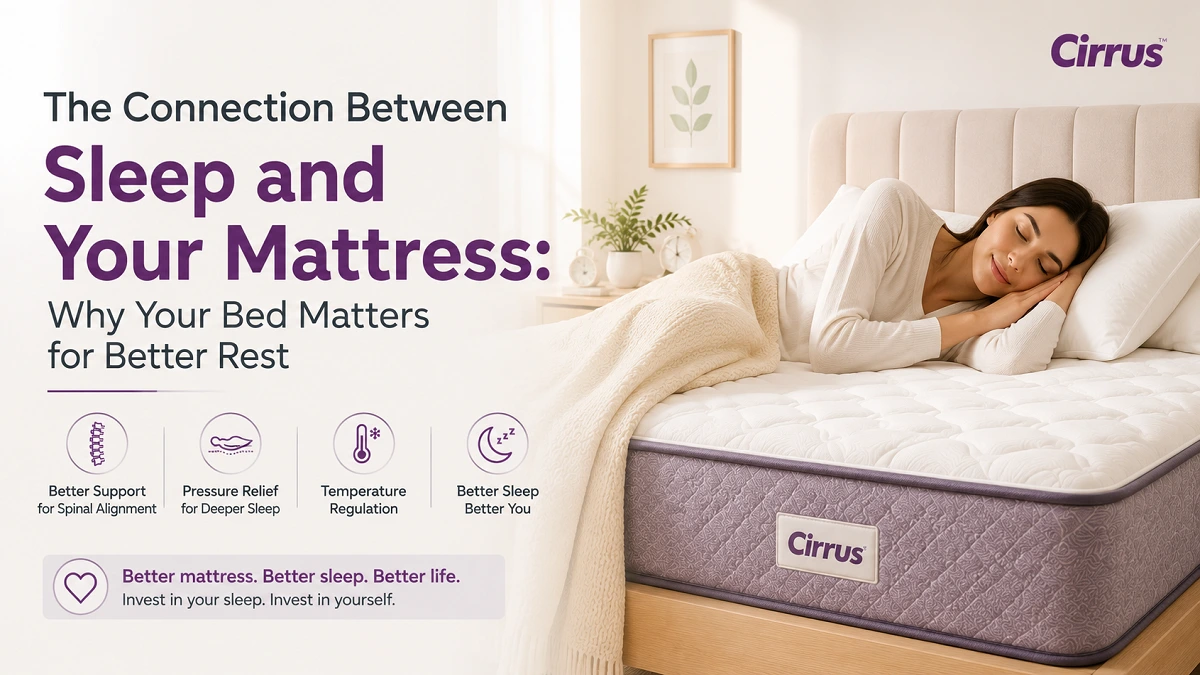
The Connection Between Sleep and Your Mattress: Why Your Bed Matters for Better Rest

Key Takeaways
- Your mattress directly affects sleep quality and overall health.
- Proper spinal support reduces discomfort and improves restorative sleep.
- Rubberized coir mattresses offer firm, breathable support, while foam mattresses provide pressure relief.
- Replacing an unsuitable mattress can significantly improve sleep quality.
- Cirrus mattresses are engineered for lasting comfort and healthier sleep.
Why Your Mattress Matters
Quality sleep is essential for physical recovery, mental well-being, and everyday productivity. While lifestyle habits influence sleep, one of the biggest factors is often overlooked—your mattress.
A supportive mattress helps maintain healthy spinal alignment, reduces pressure points, and creates the comfort needed for uninterrupted sleep. At Cirrus, our rubberized coir mattresses and foam mattresses are designed to deliver the ideal balance of support, comfort, and durability for a refreshing night’s rest.
How Your Mattress Affects Sleep Quality
Supports Healthy Spinal Alignment
A mattress should keep your spine in a natural position throughout the night. A rubberized coir mattress provides firm, stable support, while a foam mattress gently cushions the body’s natural curves. Proper alignment helps reduce back, neck, and shoulder discomfort, allowing you to wake up feeling refreshed.
Reduces Pressure Points
Pressure on the shoulders, hips, and lower back can interrupt sleep. A quality foam mattress distributes body weight evenly, while a well-designed rubberized coir mattress offers resilient support without compromising comfort.
Improves Breathability
Sleeping on a hot mattress can lead to restless nights. Every Cirrus coir mattress is crafted using 100% natural rubberized coir, allowing excellent airflow that helps regulate temperature and creates a cooler, more comfortable sleeping environment.
Looking for better sleep? Explore Cirrus’ range of Rubberized Coir Mattresses and Foam Mattresses designed for lasting comfort and everyday support.
Signs You Need a New Mattress
You may need to replace your mattress if you experience:
- Frequent tossing and turning.
- Morning back, neck, or shoulder pain.
- Visible sagging or uneven surfaces.
- Reduced comfort despite getting enough sleep.
- Waking up feeling tired every morning.
If these signs sound familiar, choosing a mattress that suits your sleep style can make a noticeable difference.
Choosing the Right Mattress
Selecting the right mattress depends on your personal preferences and support requirements.
| Sleep Need | Recommended Mattress |
| Firm support | Rubberized Coir Mattress |
| Pressure relief | Foam Mattress |
| Better airflow | Rubberized Coir Mattress |
| Balanced comfort | Foam Mattress |
For a detailed buying guide, read our article on How to Choose the Perfect Mattress, and learn more about the differences in our Rubberized Coir Mattress vs Foam Mattress Guide.
Why Choose Cirrus?
Since 1965, Cirrus has been helping families sleep better with thoughtfully engineered mattresses. Every Cirrus coir mattress is manufactured using 100% natural rubberized coir and India’s pioneering sag-resistant technology, delivering superior durability, breathability, and support. Our premium foam mattresses are designed to provide lasting comfort, making Cirrus a trusted choice for quality sleep.
Frequently Asked Questions
1. Can a mattress really affect sleep quality?
Yes. A supportive mattress improves spinal alignment, reduces pressure points, and promotes uninterrupted sleep.
2. Which mattress is better for back support?
A rubberized coir mattress offers firm, stable support, making it an excellent choice for maintaining healthy spinal alignment.
3. Is a foam mattress good for side sleepers?
Yes. Foam mattresses provide pressure relief around the shoulders and hips, making them suitable for most side sleepers.
4. How do I know if my mattress needs replacing?
Persistent discomfort, sagging, visible wear, or waking up with aches are common signs that it’s time for a new mattress.
5. Why are rubberized coir mattresses more breathable?
Natural rubberized coir has an open fibre structure that promotes airflow, helping regulate temperature throughout the night.
6. Why choose Cirrus mattresses?
With over six decades of expertise, Cirrus combines premium materials, India’s first sag-resistant technology, and natural rubberized coir to create durable mattresses that support healthier, more restful sleep.
Conclusion
Better sleep begins with the right mattress. Whether you prefer the firm support of a rubberized coir mattress or the cushioned comfort of a foam mattress, choosing a mattress that matches your sleep needs can transform the quality of your rest.
Explore the Cirrus mattress collection today and experience the difference that expert craftsmanship and decades of sleep innovation can make.