Cart 0

Key Takeaways
- Proper mattress care improves comfort and durability.
- Rotate your mattress regularly to promote even wear.
- Use a mattress protector to guard against stains and dust.
- A supportive bed base helps maintain mattress performance.
- Simple maintenance habits can extend your mattress’s lifespan.
Why Mattress Care Matters
A quality mattress is an investment in better sleep, and with proper care, it can continue providing comfort and support for years. Whether you own a rubberized coir mattress or a foam mattress, regular maintenance preserves its structure, hygiene, and performance.
At Cirrus, our mattresses are engineered for durability using premium materials and India’s pioneering sag-resistant technology. Following a few simple care practices will help you get the best from your mattress.
Tips to Extend Your Mattress Life
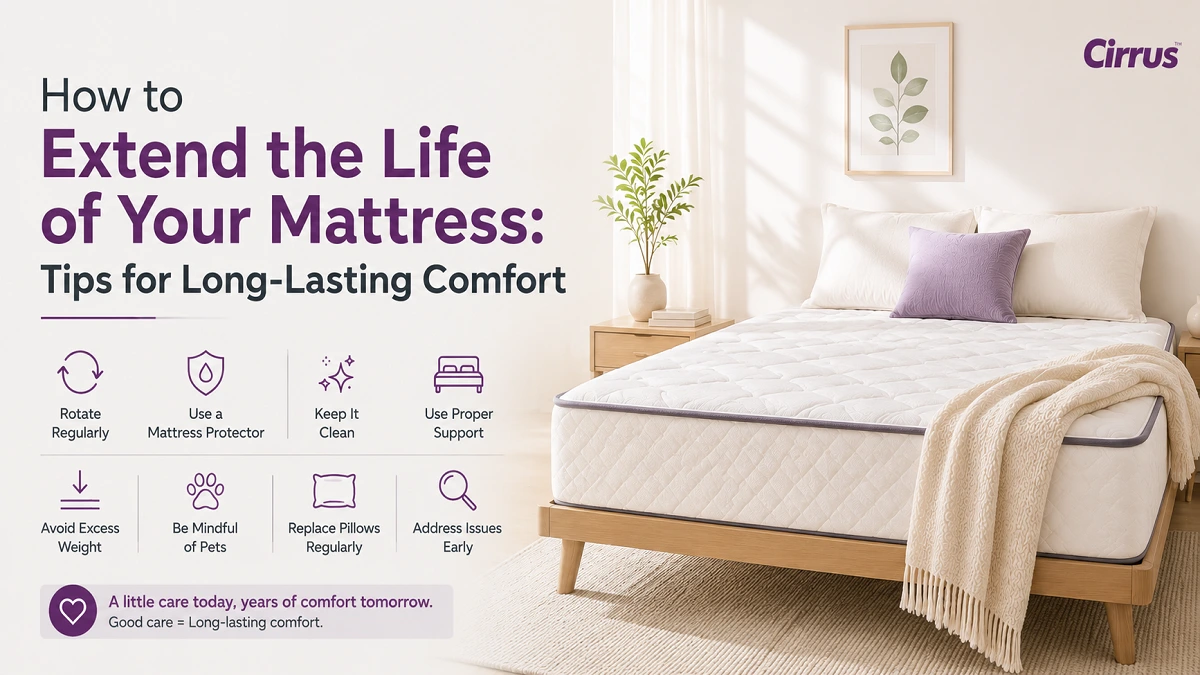
1. Rotate Your Mattress Regularly
Rotate your mattress every 3–6 months to distribute wear evenly. Most Cirrus mattresses are designed to be rotated rather than flipped—always refer to the product care instructions.
2. Protect Your Mattress
Use a quality mattress protector to safeguard against spills, stains, dust mites, and allergens. A protector helps keep your mattress fresh while preserving its warranty and appearance.
3. Keep It Clean
Vacuum your mattress periodically to remove dust and debris. Spot-clean stains using a mild detergent and allow the mattress to dry completely before use.
4. Choose the Right Bed Base
A sturdy, well-supported bed frame ensures even weight distribution and helps prevent premature sagging. Make sure the foundation matches your mattress dimensions and provides adequate support.
5. Avoid Excessive Pressure
Jumping on the bed or placing excessive weight on one area can affect the mattress structure over time. Gentle everyday use helps maintain its original comfort.
6. Maintain a Healthy Sleep Environment
Keep your bedroom well ventilated to reduce moisture buildup. If pets share your bed, consider using an additional protective cover to keep the mattress clean.
7. Inspect Your Mattress Periodically
Check for signs of wear, such as uneven surfaces or reduced support. Addressing concerns early helps maintain consistent sleeping comfort.
Looking for long-lasting sleep solutions? Explore Cirrus’ premium Rubberized Coir Mattresses and Foam Mattresses, crafted for durability, comfort, and everyday performance.
Why Choose Cirrus?
Since 1965, Cirrus has been manufacturing premium mattresses that combine innovative engineering with natural materials. Every coir mattress from Cirrus is crafted using 100% natural rubberized coir, delivering excellent ventilation, resilient support, and long-term durability. Our foam mattresses are designed to provide balanced comfort and pressure relief, ensuring quality sleep for every lifestyle.
To learn more, read our guides on How to Choose the Perfect Mattress and Understanding Rubberized Coir Mattress vs Foam Mattresses to make an informed buying decision.
Frequently Asked Questions
1. How often should I rotate my mattress?
Rotate your mattress every 3–6 months to promote even wear and extend its lifespan.
2. Should I flip my Cirrus mattress?
Most Cirrus mattresses are designed to be rotated rather than flipped. Always follow the care instructions for your specific model.
3. Do mattress protectors really help?
Yes. A mattress protector shields against spills, stains, allergens, and dust, helping maintain hygiene and prolong mattress life.
4. How do I clean a rubberized coir mattress?
Vacuum it regularly and spot-clean stains with a mild detergent. Avoid soaking the mattress or using harsh chemicals.
5. Can a poor bed frame damage my mattress?
Yes. An unsupportive or damaged bed frame can lead to uneven wear and reduce mattress performance over time.
6. How long does a quality mattress last?
With proper care and maintenance, a premium rubberized coir or foam mattress can provide years of reliable comfort and support.
Conclusion
Regular care is the key to protecting your investment and ensuring years of comfortable sleep. By rotating your mattress, keeping it clean, using a protector, and providing the right support, you can maximize the performance of your rubberized coir mattress or foam mattress.
Discover Cirrus mattresses today and experience durable comfort backed by decades of trusted sleep innovation.