Cart 0

Key Takeaways
- Understand the difference between rubberized coir and foam mattresses.
- Choose a mattress based on your sleep style and support needs.
- Rubberized coir mattresses provide natural ventilation and firm support.
- Foam mattresses offer enhanced cushioning and pressure relief.
- Cirrus combines over 60 years of innovation with premium materials for healthier sleep.
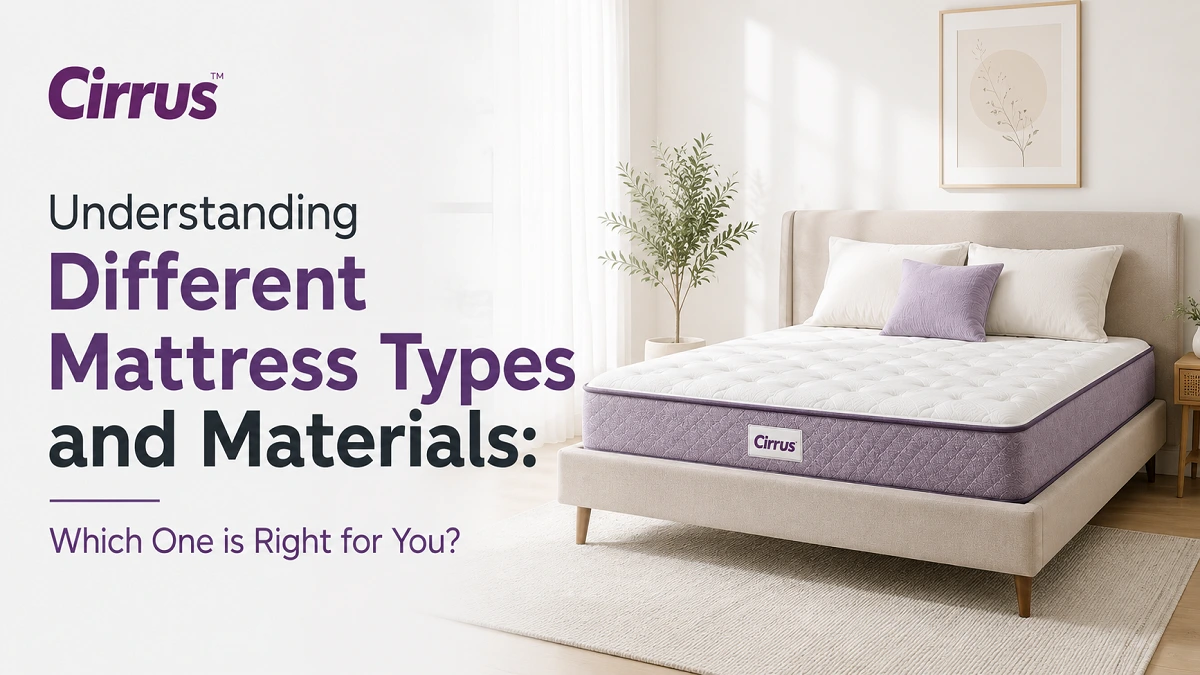
Why Mattress Material Matters
The material inside your mattress determines its comfort, durability, breathability, and spinal support. While there are many mattress types available, choosing one should be based on your sleep habits rather than market trends.
At Cirrus, we focus on two proven sleep solutions—Rubberized Coir Mattresses and Foam Mattresses—designed to deliver lasting comfort, durability, and healthy sleep.
Types of Mattresses Available From Cirrus
Rubberized Coir Mattresses
Crafted from natural coconut fibres bonded with rubber latex, a rubberized coir mattress offers firm support, excellent airflow, and exceptional durability. While many people search for a coir mattress, every Cirrus coir mattress is made using premium rubberized coir, providing better resilience and long-term performance.
Best for:
- Back and stomach sleepers
- Orthopedic support
- Hot sleepers
- Long-lasting durability
Foam Mattresses
Foam mattresses gently adapts to your body’s contours, reducing pressure on the shoulders, hips, and joints while maintaining proper spinal alignment.
Best for:
- Side sleepers
- Couples
- People seeking enhanced comfort
Rubberized Coir Mattress vs Foam Mattress
| Feature | Rubberized Coir Mattresses |
Foam Mattresses
|
| Support | Firm | Medium to Plush |
| Airflow | Excellent | Good |
| Pressure Relief | Moderate | Excellent |
| Durability | Excellent | High |
| Ideal For | Firm support | Comfort seekers |
Looking for the perfect fit? Explore Cirrus’ collection of Rubberized Coir Mattresses and Foam Mattresses to discover the ideal balance of comfort and support.
Why Choose Cirrus Mattresses?
Since 1965, Cirrus has been delivering quality sleep solutions through innovative engineering and premium materials. Our mattresses feature India’s first sag-resistant technology, 100% natural rubberized coir, eco-conscious manufacturing, and Made-in-India craftsmanship, ensuring healthier, more restful sleep for years to come.
To learn more, explore our guides on How to Choose the Perfect Mattress.
Frequently Asked Questions
1. What is a rubberized coir mattress?
A rubberized coir mattress is made from natural coconut fibres bonded with natural rubber latex. It offers firm support, excellent ventilation, and long-lasting durability, making it ideal for healthy and comfortable sleep.
2. Is a rubberized coir mattress better than a foam mattress?
It depends on your sleep preferences. A rubberized coir mattress provides firmer support and better airflow, while a foam mattress offers superior cushioning and pressure relief.
3. Who should choose a rubberized coir mattress?
Rubberized coir mattresses are ideal for back and stomach sleepers, people seeking firm orthopedic support, and those who prefer a naturally breathable mattress.
4. Who should choose a foam mattress?
Foam mattresses are well suited for side sleepers, couples, and anyone looking for enhanced comfort and pressure relief around the shoulders and hips.
5. Are Cirrus coir mattresses made with natural materials?
Yes. Every Cirrus coir mattress is crafted using premium natural rubberized coir, offering excellent durability, resilience, and ventilation while supporting eco-friendly manufacturing practices.
6. How long does a rubberized coir mattress last?
A high-quality rubberized coir mattress can provide years of reliable support when properly maintained. Rotating the mattress periodically and using a mattress protector can help extend its lifespan.
7. Which mattress is best for hot sleepers?
A rubberized coir mattress is an excellent choice for hot sleepers because its open fibre structure promotes better airflow and helps dissipate heat more effectively than many conventional mattress materials.
8. Why choose Cirrus mattresses?
Since 1965, Cirrus has been manufacturing premium mattresses in India using innovative sleep technology and 100% natural rubberized coir. With India’s pioneering sag-resistant mattress technology, Cirrus combines durability, comfort, and sustainable craftsmanship to deliver healthier sleep.
Conclusion
Choosing the right mattress starts with understanding the materials that best suit your sleep style. Whether you prefer the natural firmness of a rubberized coir mattress or the plush comfort of a foam mattress, Cirrus offers trusted sleep solutions backed by decades of innovation.
Explore the Cirrus mattress collection today and experience healthier, more refreshing sleep.